
Every designer I know has had the conversation. AI comes up, the room shifts, and someone asks the question we’re all apparently thinking: will it take our jobs? I’ve been sitting with a different question lately. Not what AI takes, but what it gives back. And I think that reframe changes everything.
There’s a particular kind of silence that falls over a room when someone mentions AI to a group of designers. Not hostile, exactly. More like braced. The kind of quiet that comes just before someone says something careful.
I’ve been in those rooms. I’ve had those conversations. And what strikes me isn’t the fear. Fear makes sense when something threatens the work you’ve built your identity around. What strikes me is the question underneath it. Because almost every conversation about AI and design eventually narrows to the same one: will it replace us?
It’s the wrong question. And I think we know it.
What we’re actually afraid of
The replacement anxiety is real, but it’s a surface layer. Underneath it is something more uncomfortable: the possibility that a lot of what we’ve called “design work” was never really the point.
If AI can generate ten layout variations in the time it takes you to open a new Figma frame, what does that say about the value of the variation? If it can apply a design system consistently across 200 screens without a single deviation, what does that say about the hours spent enforcing consistency manually? Not that those things weren’t necessary. But necessary isn’t the same as irreplaceable.
The work that AI is coming for is the execution layer. The production. The iteration for iteration’s sake. And if that work has been filling most of your days, the question isn’t whether AI will take it. It’s what you want to do with the time when it does.
What does AI-assisted design actually give back?
I’ve noticed something in my own practice and in the designers around me: the ones who are genuinely energised by AI aren’t the ones who’ve stopped caring about craft. They’re the ones who’ve always cared most about the thinking. They just haven’t always had enough time for it.
I think of this as the reclamation model of AI-assisted design. You get back the hours spent on tasks that required attention but not judgement. And you redirect them toward the work that requires both.
The brief that deserved more questioning before it became a wireframe. The user behaviour pattern that was always slightly off but never got properly investigated. The design system that works, technically, but doesn’t encode the why behind the decisions so every new designer joining the team has to rediscover it themselves.
That’s where the interesting design problems live. And most of us haven’t had nearly enough time there.
Why resistance often signals something else
When I hear designers say they don’t want to use AI tools, not “I’ve tried them and they don’t fit my workflow” but a more categorical resistance, I’ve started to hear something underneath it.
Sometimes it’s a legitimate craft argument. Some design work is irreducibly human: the kind of judgement that comes from sitting with a problem long enough that the obvious solution stops looking obvious. That’s fair, and AI doesn’t touch it.
But sometimes the resistance is about something closer to identity. The tools have been so bound up with the work that removing them feels like removing the proof of skill. If AI can do in seconds what took you years to learn, what does that mean about those years?
It means those years built something AI doesn’t have: taste, context, the ability to know which of ten generated options is actually right and why. The tool got faster. The judgement didn’t get cheaper.
This connects to something I keep coming back to in my own work: design was never really about what you make. It was always about the thinking that preceded it.
The better question
The design community has always adapted to new tools. From hand-drafting to CAD, from print to digital, from pixel-pushing to component libraries. Each shift felt threatening to the practitioners most identified with the previous way. Each shift eventually revealed that the tools were never the irreplaceable part.
AI is a faster version of that same shift. Which means the question isn’t “will it replace us?” The question is: what do you want to be doing when the mechanical parts of design are handled?
Because that’s where this is heading. Not toward a world where designers aren’t needed, but toward a world where what designers are needed for becomes unmistakably clear. The thinking. The framing. The judgement about what’s worth making and why. The ability to look at ten AI-generated options and know, with something that can’t quite be articulated but can absolutely be trained, which one is right.
That’s not a smaller role for design. It’s a more honest one.
And honestly? It’s the role most of us got into this for in the first place. The discomfort of change is rarely a signal to stop. It’s usually a signal that something worth keeping is being tested.
Key takeaways
- AI is targeting the execution layer of design, not the judgement layer.
- The reclamation model: AI-assisted design gives back time for work that requires both attention and judgement.
- Resistance to AI is sometimes a craft argument, but it’s often an identity one. Those are different problems.
- The designers who thrive won’t be the ones who avoided AI. They’ll be the ones who used it to get closer to the work they always wanted to do.
Want to spend that reclaimed time actually building something?
The Claude Starter Guide is a practical, plain-English walkthrough for setting up Claude properly, so the hours AI hands back go toward the thinking, not more tool-fiddling.
Want to spend that reclaimed time actually building something? The Claude Starter Guide is a practical, plain-English walkthrough for setting up Claude properly, so the hours AI hands back go toward the thinking, not more tool-fiddling.
You might also like
- Design isn’t what you make. It’s what you make possible.
- The goal has to be bigger than the feeling
- The UX of everyday life
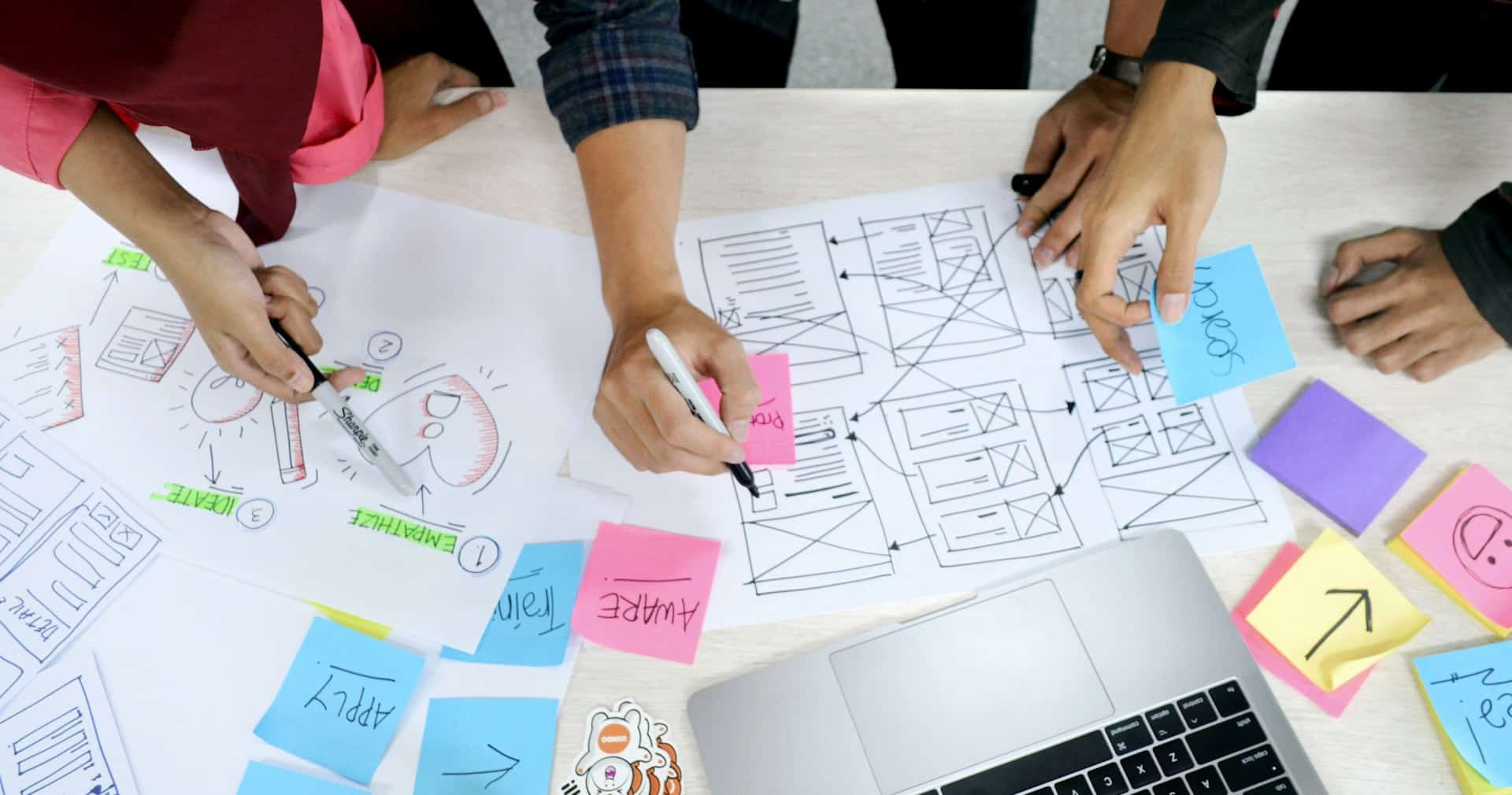
Photo by UX Indonesia on Unsplash
Frequently asked questions
Will AI take designers’ jobs?
That is the question every room asks, and it is the wrong one. The more useful question is what AI gives back: time, iteration speed, and space for the strategic and human work designers always said they wanted more of. What happens next depends on what you do with what it returns.
What does AI actually give back to designers?
The hours previously consumed by production and variation. When execution accelerates, what is left over is the harder, more valuable work: framing problems, understanding people, exercising judgement. AI hands designers back the parts of the job that made them want to be designers.
Why do some designers resist AI?
It often presents as a craft argument but is really an identity one. When your sense of self is built on being the person who makes the thing, a tool that makes things feels like a threat to who you are, not just how you work. Naming that honestly is the first step past it.
What is the better question to ask about AI and design?
Not what AI takes, but what it gives back, and what you will do with it. The designers who thrive will not be the ones who avoided AI. They will be the ones who used it to get closer to the work they always wanted to do.
Leave a Reply