

Claude will get things wrong. It will miss the point, produce something generic, confidently state something inaccurate, or give you exactly what you asked for and not at all what you needed. None of that is a reason to give up on it. It’s a reason to understand how it fails, and what to do when it does.
The honest post. The one most guides skip because it’s not very aspirational.
I’m Chantelle Staples, and Claude has frustrated me regularly. Here’s what I’ve learned about why it goes wrong, and what actually helps.
Why does Claude produce generic outputs?
Almost always, the brief was too thin. Generic inputs produce generic outputs. Claude is trained on an enormous amount of text, and when you don’t give it enough to differentiate your request from everyone else’s, it defaults to the average of everything it’s seen.
The fix: more context, more specificity, more constraint. What you want, who it’s for, what it should feel like, what it definitely shouldn’t do. The more you narrow the brief, the further Claude moves from average.
What do you do when Claude misses the point?
Tell it. Specifically.
Not “that’s not right”, that’s too vague to act on. “You’ve written this as a guide, but I wanted a personal essay. The whole structure needs to change.” “The tone is too formal. I want it to feel like a conversation, not a presentation.” “You’ve answered the question I asked, but the real question is X.”
Claude responds well to honest, specific feedback. It doesn’t get defensive. It doesn’t need to be managed. Just tell it what’s wrong and what you need instead.
Can you trust what Claude tells you?
For factual claims: verify anything that matters. Claude can and does state things confidently that are wrong, out of date, or subtly inaccurate. It’s not lying, it’s doing its best with the information it was trained on, which has a cutoff date and gaps.
For creative and strategic work: trust it more. Claude’s reasoning about structure, tone, what’s working in a piece of writing, what a user might be thinking, this is generally reliable and worth engaging with seriously.
The simple rule: the more verifiable the claim, the more important it is to verify it. Don’t publish a statistic Claude gave you without checking the source.
What are Claude’s actual limitations?
Real-time information. Claude’s knowledge has a cutoff. Anything current, news, prices, live data, recent events, needs to come from you or from a tool that can search the web.
Deeply personal judgement. Claude can simulate a lot of perspectives, but it doesn’t know your specific relationships, history, or context the way you do. For decisions that are genuinely personal, it’s a thinking partner, not an authority.
Genuine novelty. Claude recombines and synthesises exceptionally well. True creative leaps, the genuinely unexpected connection, the idea nobody has had before, still need a human mind. Claude is brilliant at developing an idea once you’ve had it. The spark usually still has to come from you.
When should you start over vs iterate?
Iterate when the structure is right but the execution is off. The piece is doing the right thing, it just needs refinement.
Start over when the brief was wrong. If the output is pointing in the wrong direction entirely, going back and rewriting the prompt will get you further faster than trying to edit your way out of a wrong foundation.
The diagnostic question: is this the right kind of thing, done imperfectly? Or is this the wrong kind of thing, done competently? The answer tells you whether to push forward or start again.
Key takeaways
- Generic outputs almost always mean a thin brief. More context, specificity, and constraint moves Claude away from the average.
- When Claude misses the point, tell it specifically what’s wrong and what you need instead. It responds well to honest, direct feedback.
- Verify factual claims that matter. Trust creative and strategic reasoning more, but stay engaged with it critically.
- Real limitations: real-time information, deeply personal judgement, genuine novelty. Know where the boundaries are.
- Iterate when execution is off. Start over when the brief was wrong.
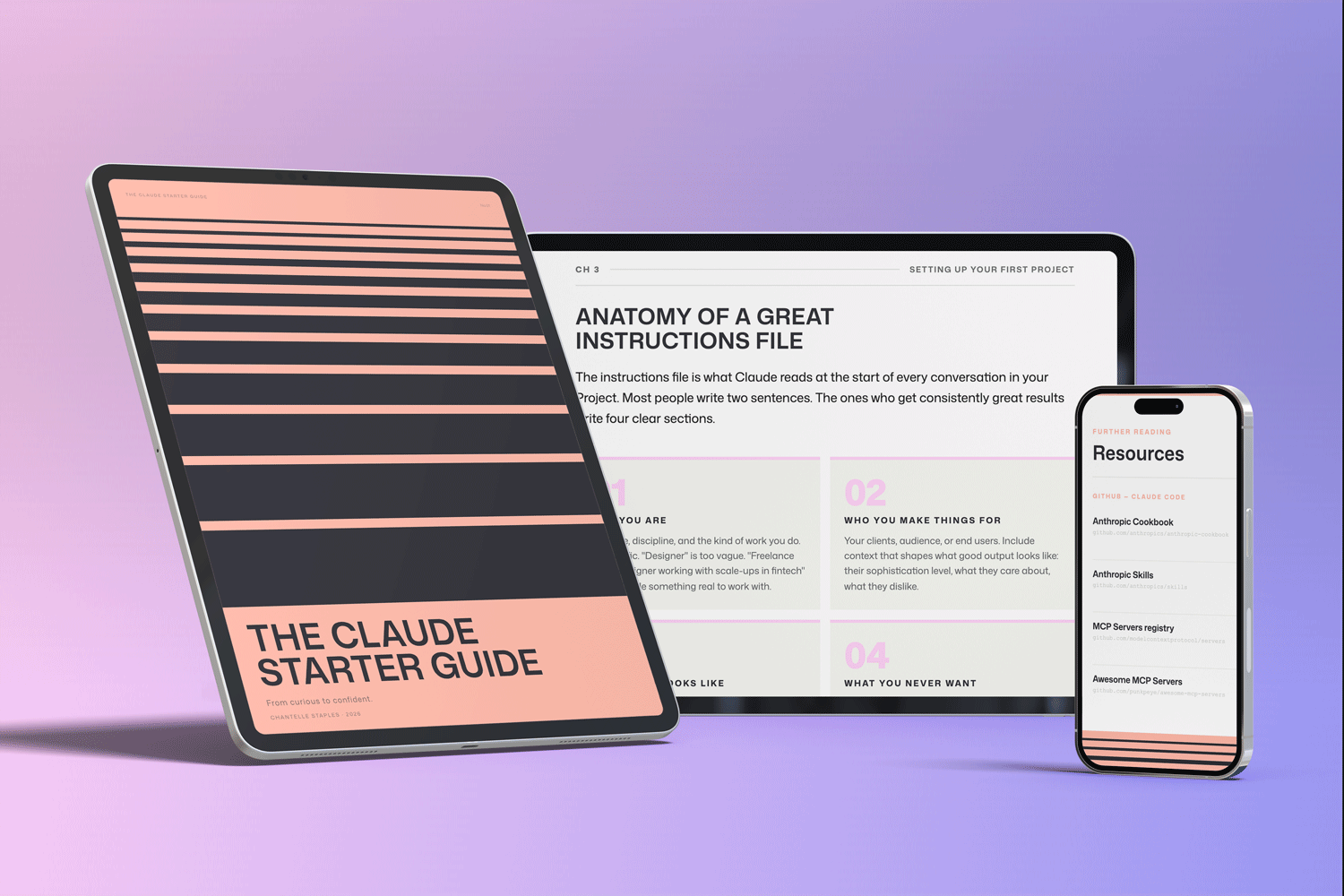
THE CLAUDE STARTER GUIDE
The complete guide to getting started with Claude.
Not sure where to start with Claude, or not getting the results you’re after? This is the guide for you.
Pre-built skills for design, product, and marketing. GitHub setup that makes sense. Step-by-step walkthroughs. Every template and workflow from this series, in one download.
You might also like
- Lost in all the Claude buzz? Here’s what actually matters
- How to set up your first Claude project
- The Claude workflows that save creatives hours every week
Frequently asked questions
Want the full picture? The Claude Starter Guide puts this and every article in the series in sequence — with exercises, worked examples, and the companion GitHub skills kit.
Leave a Reply